
Your audience is online, but is your brand visible?
In a digital world where millions of posts go live every nanosecond, posting aimlessly on social media is like crying into the void. The fact is, without a strategy, your social media efforts are just noise.
This blog will walk you step by step through creating a social media strategy that works — one that connects, converts, and keeps your readers coming back.
🚀 What Is a Social Media Strategy and Why Does It Matter?
A social media strategy is your game plan for using platforms like Instagram, Facebook, LinkedIn, and Twitter (X) to achieve your marketing objectives. It includes what you post, how frequently you post, and how you engage with your followership. Without a strategy, you’re just guessing, and in marketing, guessing doesn’t bring results.
A solid plan ensures that
1. Every post serves a purpose.
2. Your brand voice stays harmonious.
3. You attract the right followership rather than just random followers.
Pro Tip: Before you start, define why you want to use social media: is it brand awareness, leads, deals, or client loyalty? Knowing your “why” helps shape every move you make.
Read Also: Digital Marketing Hacks to Boost Your Business Today
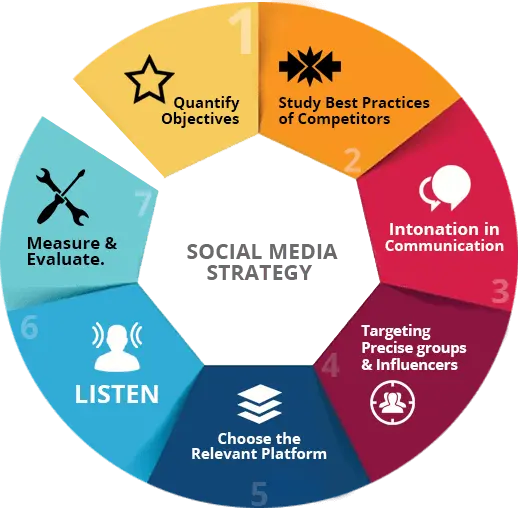
🧩 Step 1: Define Your Goals Clearly
Your objectives form the base of your social media strategy. Without them, the performance or success is impossible to measure. It is advised to use the SMART framework:
- Specific: Illustration – “ Increase Instagram followers by 1k in 3 months. ”
- Measurable: Track criteria, such as engagement rate, clicks, or reach.
- Attainable: Set pretensions grounded on your current stage.
- Relevant: Align with your business objectives.
- Time-bound: set deadlines to stay focused.
For illustration, rather than “ get further followers, ” aim for “ gain 1,000 new LinkedIn followers by the end of the year through daily study leadership posts. ”
Read Now: How to form SMART Goals & Make them a reality
🧠 Step 2: Get to Know Your Viewers Like a Friend
Without knowing exactly who you are speaking to, it is impossible to formulate a strong social media strategy. Examine your audience in depth:
- Demographics such as Location, occupation, age, and gender
- Interests, pastimes, and inclinations
- Online conduct (the content they interact with)
- Issues they’re having and would like a solution for
To learn about your demographics, use programs like Sprout Social, Google Analytics, and Meta Insights. Next, develop a buyer persona, which is a fictional character that stands in for your ideal customer.
For example, “Aarav, 25, loves travel and sustainability, spends two hours on Instagram every day, and follows life brands that support eco-friendly causes.”
Every post you write will feel more relevant and specific once you realize this.
🗺️ Step 3: Choose the Right Platforms
Not every platform suits every business. Focus on where your audience is actually present and active.
- Instagram & TikTok: These are great for visual brands, fashion, food, and lifestyle content, which is consumed mainly by the youth.
- LinkedIn: LinkedIn is perfect for B2B businesses and professionals.
- Facebook: Good for communities and local businesses, as it is used by both youngsters as well as middle-aged people.
- Pinterest: Excellent for home décor, design, and DIY content.
- YouTube: Best for tutorials, explainers, and storytelling videos.
Don’t try to be everywhere on social media. It’s better to dominate one platform than to be invisible on five.
✍️ Step 4: Produce Useful and Reliable Content
People stop scrolling on social media because of your content. Make it matter. Content types to incorporate:
- Educational: How-tos, tutorials, or advice.
- Memes, challenges, and reels are entertaining.
- Quotes, success stories, or behind-the-scenes photos are examples of inspirational content.
- Interactive: Contests, Q&As, and polls.
Make use of the 80/20 rule, which states that 20% of content should be promotional and 80% should be value-driven.
Content calendar: Schedule your posts on a weekly or monthly basis. This prevents last-minute rush and maintains consistency in your feed. Your posting schedule can be automated with programs like Later, Hootsuite, or Buffer.
“Being consistent means showing up with value every time, not posting every day.”

🎨 Step 5: Create an Identifiable Brand
Every outstanding social media page has a distinct personality, tone, and color scheme that make it instantly identifiable. Here’s how to construct yours:
- Style of visuals: Select consistent imagery, brand colors, and fonts.
- Voice tone: Is your brand authoritative and professional or lighthearted and informal?
- Place your logo subtly but consistently throughout the images.
Recall that consistent branding fosters trust. You’ve done it right if people can recognize your style right away.
💬 Step 6: Instead of just posting, Engage
Social media is a two-way street. Community is created through engagement, and community fosters loyalty. Methods of interaction:
- Quickly respond to comments and direct messages.
- Make use of live sessions, polls, and stories.
- Get opinions and comments.
- Encourage others in your niche by sharing and commenting on their posts.
Your presence grows stronger the more conversations you initiate.
📈 Step 7: Improve Your Strategy with Analytics
Every post teaches you something. Use data to see what in your social media strategy is working and what’s not.
Track metrics like:
- Engagement rate (likes, shares, comments)
- Reach and impressions
- Follower growth
- Website clicks and conversions
Adjust your approach accordingly, if videos perform better than carousels, focus more on video content. Remember! “Data doesn’t just measure success; it guides your next move.”
💡 Step 8: Keep Up with Current Trends
Social media is constantly evolving. What was effective six months ago might not be effective now. 2026 is being shaped by trends like short-form videos, AI-generated content, and genuine storytelling. To stay up to date, follow industry blogs, podcasts, and creators. Engage in trends that complement your brand, but refrain from mindlessly imitating them. Always add your own unique touch.
🧲 Step 9: Include Paid Advertising
Although organic reach is fantastic, you occasionally need a boost. You can precisely target particular audiences with platforms like LinkedIn Ads, TikTok Ads, and Meta Ads. Start small, learn from your mistakes, and then scale what works.
Paid advertisements can:
- Boost awareness of your brand
- Increase website traffic
- Increase interest in new releases
Also refer: Meta for Business – Advertising Guide
🧱 Step 10: Keep Improving and Experimenting
Social media strategy is always changing as user preferences and platforms do.
- Every few months, update your graphics.
- Try out different formats for your content.
- Review your objectives every three months.
“Brands that continue to learn, adapt, and listen are the ones that succeed on social media.”

🌟 Final Thoughts
Developing a successful social media strategy requires understanding your audience, providing value, and maintaining consistency rather than following trends or using fancy tools. Begin modestly. Pay attention to connection, creativity, and clarity. Your presence will naturally increase over time, not just in terms of quantity but also in terms of actual, devoted followers who are passionate about your brand.
If you thought this guide was useful, see how these tactics fit into your overall online marketing strategy by reading our related post on Digital Marketing Hacks to Boost Your Business.
✅ Summary Table: Key Steps for a Winning Social Media Strategy
| Step | Focus Area | Goal |
| 1 | Define SMART goals | Set measurable objectives |
| 2 | Know your audience | Create relevant content |
| 3 | Choose platforms | Focus on where your audience is |
| 4 | Create content | Deliver consistent value |
| 5 | Build brand identity | Stay visually and tonally consistent |
| 6 | Engage actively | Build community and trust |
| 7 | Analyze results | Improve using data insights |
| 8 | Stay updated | Adapt to new trends |
| 9 | Use paid ads | Boost reach and conversions |
| 10 | Keep evolving | Maintain growth long-term |
The question is whether your audience will pause for your brand since they are already scrolling. Make every post matter by developing your social media strategy now.